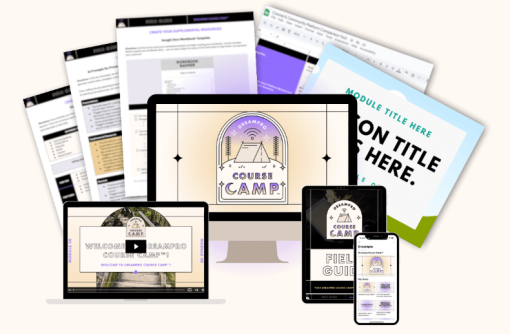
Ariel Schiffer – Dreampro Course Camp+Passive as Funnel

Introduction
The digital education and creator economy has evolved into a sophisticated ecosystem where knowledge, branding, and automation intersect to form scalable online businesses. Among the growing number of programs promising results, Ariel Schiffer – Dreampro Course Camp+Passive as Funnel stands out for its strategic approach to funnel design, audience psychology, and passive income systems. Instead of focusing only on course creation, this program emphasizes building a complete ecosystem that attracts, nurtures, converts, and retains audiences.
At its core, the program is designed to help entrepreneurs, coaches, freelancers, and content creators transform ideas into structured digital assets. It aims to bridge the gap between inspiration and implementation, offering not just motivation but also frameworks that can be applied in real business environments.
This article explores the philosophy, structure, components, benefits, and practical use cases of the Dreampro framework, offering a comprehensive look at why this program has attracted attention within online business communities.
The Philosophy Behind the Dreampro Framework
The Dreampro concept is rooted in a simple but powerful belief: sustainable success is not built on one-time launches but on systems. Rather than chasing constant visibility, the methodology focuses on long-term positioning, funnel architecture, and evergreen value delivery.
Unlike many traditional programs that center on short bursts of marketing energy, the Dreampro framework promotes an integrated approach. Branding, product creation, lead generation, and automated nurturing are treated as interconnected processes. This allows creators to shift from manual selling to structured growth.
Ariel Schiffer – Dreampro Course Camp+Passive as Funnel encourages participants to think like architects rather than promoters. The program positions funnels not as aggressive sales machines but as guided experiences that lead audiences through education, trust-building, and value alignment before any transaction occurs.
Understanding “Passive as Funnel” in a Modern Context
The phrase “Passive as Funnel” does not suggest the absence of work. Instead, it refers to the strategic placement of effort so that assets continue working after their creation. This includes automated email sequences, evergreen workshops, lead magnets, community platforms, and scalable course infrastructures.
In this model, content becomes more than visibility tools. Videos, guides, and workshops function as entry points into structured journeys. Each piece has a defined role, whether it introduces a concept, solves a micro-problem, or prepares the audience for a deeper transformation.
Within Ariel Schiffer – Dreampro Course Camp+Passive as Funnel, participants are guided to design funnels that behave like digital ecosystems. They attract attention, capture interest, deliver value, and provide natural progression paths without requiring constant manual involvement.
Core Components of the Course Camp
1. Vision and Market Clarity
The foundation of the program lies in defining purpose and positioning. Before any funnel is built, participants are guided to identify:
The transformation they offer
The audience they serve
The long-term business vision
The emotional and practical needs of their market
This step ensures that funnels are not generic templates but customized frameworks aligned with personal strengths and audience expectations.
2. Offer Architecture
The next stage centers on structuring offers. This includes:
Entry-level resources
Core digital programs
Premium experiences
Ongoing community or mentorship models
Instead of isolated products, the program promotes interconnected offers that support each other. Each product becomes part of a journey rather than a standalone transaction.
3. Funnel Engineering
Funnel engineering is where theory meets application. Participants explore how to design:
Lead generation systems
Nurture sequences
Automated workshops
Conversion pathways
The emphasis is on clarity and user experience. Funnels are structured as guided narratives rather than sales scripts, ensuring that each step logically flows into the next.
4. Content as Infrastructure
Content is treated as a long-term asset. Instead of producing content solely for engagement, the program trains participants to build libraries that feed funnels, answer objections, and pre-qualify audiences.
Blogs, videos, and social content are mapped directly to funnel stages, ensuring that every piece serves a strategic function within the broader ecosystem.
Strategic Learning Methodology
One of the defining features of Ariel Schiffer – Dreampro Course Camp+Passive as Funnel is its layered learning approach. Rather than overwhelming participants with tools, the program moves through stages:
Internal clarity
Structural design
Technical implementation
Optimization and scaling
This progression mirrors real business development, allowing participants to build confidence alongside competence. Lessons are structured to integrate mindset, marketing, and mechanics into a cohesive system.
The methodology also places strong emphasis on adaptability. Instead of locking participants into rigid templates, the program trains them to evaluate data, audience feedback, and performance indicators so systems can evolve with changing markets.
Practical Applications in Real Businesses
The Dreampro framework is adaptable across multiple digital business models. Its principles can be applied to:
Online education brands
Coaching and consulting practices
Creative agencies and freelancers
Influencer-driven product ecosystems
Niche authority platforms
For educators, the system supports building evergreen course funnels that consistently
Through its integrated approach, Ariel Schiffer – Dreampro Course Camp+Passive as Funnel aligns marketing with delivery, ensuring that business growth does not compromise user experience.
Psychological and Behavioral Elements
Beyond tools and strategies, the program places significant attention on audience psychology. Funnels are not only technical constructs but behavioral pathways. Participants learn how to:
Build trust through progressive value
Reduce decision friction
Position offers through transformation rather than features
Use storytelling to guide engagement
By addressing emotional triggers alongside rational considerations, the framework ensures that funnels resonate on multiple levels. This human-centered design philosophy distinguishes the system from purely mechanical marketing models.
Automation Without Disconnection
A recurring concern in digital marketing is the loss of authenticity when automation increases. The Dreampro framework addresses this by embedding personalization within automation.
Participants are trained to build systems that:
Segment audiences intelligently
Deliver context-specific content
Maintain conversational brand voices
Encourage community participation
Rather than replacing connection, automation becomes a structure that amplifies it. This allows creators to support larger audiences without sacrificing relational depth.
Long-Term Growth and Scalability
Scalability is not treated as a late-stage goal but as a foundational design principle. From the first funnel map, participants are encouraged to consider:
System longevity
Team integration potential
Content repurposing strategies
Data-driven optimization
Through this approach, businesses built within Ariel Schiffer – Dreampro Course Camp+Passive as Funnel are positioned for gradual expansion rather than volatile growth cycles.
Skill Development Beyond Funnels
While funnel creation is central, the program also cultivates transferable skills, including:
Strategic planning
Digital storytelling
Market analysis
Brand positioning
Performance tracking
These competencies empower participants to adapt to platform changes, emerging technologies, and evolving audience expectations.
Community and Collaborative Learning
Another important aspect of the Dreampro ecosystem is its community-oriented structure. Collaborative learning environments provide participants with:
Shared insights
Feedback loops
Accountability structures
Exposure to diverse business models
This collective dimension enriches the learning experience, turning isolated implementation into guided evolution.
Measuring Success in the Dreampro System
Success within the framework is not defined solely by revenue metrics. Participants are encouraged to evaluate:
Audience retention
Engagement depth
Funnel efficiency
Time-to-value ratios
Brand trust indicators
This holistic evaluation ensures that growth remains aligned with sustainability, satisfaction, and long-term relevance.
The Broader Impact of Funnel-Based Passive Systems
The rise of structured digital ecosystems reflects a broader shift in online business culture. Creators increasingly seek stability over virality and systems over sporadic success. Programs like Ariel Schiffer – Dreampro Course Camp+Passive as Funnel resonate because they address this shift directly.
By emphasizing systems thinking, value-driven content, and human-centered automation, the Dreampro framework aligns entrepreneurial ambition with operational integrity.
Conclusion
In a landscape crowded with marketing promises, the Dreampro methodology distinguishes itself through depth, structure, and sustainability. It reframes funnels as learning journeys, content as infrastructure, and automation as a support system rather than a replacement for human connection.
For creators and entrepreneurs seeking to build businesses that evolve rather than exhaust, the principles embedded within Ariel Schiffer – Dreampro Course Camp+Passive as Funnel offer a comprehensive roadmap. Through integrated strategy, psychological insight, and scalable design, the program presents a modern vision of what digital entrepreneurship can become when systems, storytelling, and service converge.