
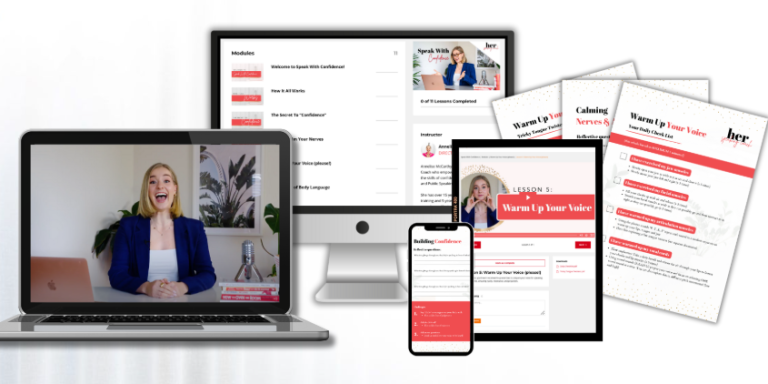
Annelise McCarthy – Speak With Confidence

Annelise McCarthy – Speak With Confidence
A Complete Guide to Mastering Powerful Communication and Self-Assured Expression
Introduction: Why Confident Speaking Shapes Success
In every area of life—career growth, leadership, personal relationships, and public influence—the ability to speak with confidence determines how messages are received and remembered. People may forget exact words, but they never forget how those words made them feel. Confidence in communication builds trust, authority, and emotional connection, which is why modern professionals increasingly seek structured guidance to strengthen their speaking abilities.
Annelise McCarthy – Speak With Confidence represents a philosophy centered on clarity, presence, and authentic expression. Rather than forcing artificial charisma, this approach focuses on internal alignment, mental discipline, and practical communication strategies that transform how individuals show up when they speak.
Understanding the Meaning of Speaking With Confidence
Speaking confidently is not about being loud, dominant, or aggressive. True confidence is calm, grounded, and intentional. It allows speakers to articulate ideas clearly while maintaining composure under pressure.
Confident speakers demonstrate:
Strong vocal clarity and controlled tone
Purposeful body language and posture
Emotional regulation and self-belief
Clear thinking and structured messaging
This communication style creates credibility, allowing audiences to focus on the message rather than the speaker’s nervousness or uncertainty.
The Core Philosophy Behind Confident Communication
The framework promoted by Annelise McCarthy – Speak With Confidence emphasizes that confidence is a skill, not a personality trait. Many people mistakenly believe confident speakers are born that way. In reality, confidence is built through awareness, preparation, and repetition.
This philosophy rests on three foundational principles:
1. Inner Alignment Comes First
Confidence starts internally. When thoughts, emotions, and intentions align, the voice naturally becomes steady and persuasive.
2. Structure Creates Safety
Knowing what to say—and how to say it—reduces anxiety. Structured speaking provides mental clarity and direction.
3. Practice Rewires the Brain
Consistent practice conditions the nervous system to remain calm and focused, even in high-pressure speaking situations.
Overcoming Fear and Self-Doubt While Speaking
Fear of speaking often stems from past experiences, fear of judgment, or perfectionism. The mind imagines failure long before it occurs, creating physical symptoms such as shaking hands, racing heartbeats, and shallow breathing.
Key techniques to overcome these barriers include:
Reframing fear as energy instead of weakness
Replacing negative self-talk with intentional affirmations
Focusing on message value rather than personal performance
Accepting imperfection as part of authenticity
Through these methods, speakers learn to redirect nervous energy into passion and presence.
The Role of Voice Control in Confident Speaking
The voice is one of the most powerful communication tools available. Tone, pace, and volume shape how messages are interpreted emotionally.
Confident speakers develop:
Steady pacing that avoids rushing
Intentional pauses that emphasize key points
Vocal variety to maintain engagement
Clear articulation to avoid misunderstandings
Within Annelise McCarthy – Speak With Confidence, vocal awareness is treated as a trainable skill rather than a natural gift.
Body Language: Communicating Without Words
Research shows that non-verbal communication often carries more weight than spoken words. Posture, gestures, and eye contact can either reinforce or contradict verbal messages.
Effective body language includes:
Upright posture that conveys authority
Relaxed shoulders and open gestures
Purposeful movement rather than nervous fidgeting
Consistent eye contact to build trust
When physical presence aligns with spoken words, confidence becomes visible and believable.
Structuring Your Message for Maximum Impact
Confident speakers rarely speak randomly. They organize thoughts into logical sequences that guide listeners effortlessly.
A proven structure includes:
Clear opening that sets expectations
Focused core message with supporting points
Relevant examples or stories
Strong conclusion that reinforces meaning
This structured approach ensures that messages remain memorable and persuasive.
Speaking With Confidence in Professional Settings
Workplace communication demands clarity, authority, and emotional intelligence. Whether presenting ideas, leading teams, or negotiating outcomes, confident speaking influences career advancement.
Professionals who master confident communication:
Express ideas without hesitation
Handle objections calmly
Lead meetings with authority
Build respect among peers and leaders
The principles behind Annelise McCarthy – Speak With Confidence translate seamlessly into professional success.
Public Speaking and Stage Presence
Public speaking amplifies emotions and self-awareness. The fear of being observed can overwhelm even experienced professionals.
To develop strong stage presence:
Anchor yourself through controlled breathing
Establish a connection with the audience early
Use intentional movement rather than pacing
Speak conversationally instead of performing
Confidence on stage comes from preparation combined with emotional control.
The Power of Authentic Communication
Audiences respond most strongly to authenticity. Confident speakers do not hide behind scripted perfection; they speak from genuine conviction.
Authentic communication:
Builds emotional trust
Encourages audience engagement
Reduces performance anxiety
Strengthens long-term influence
This authenticity is a central pillar of Annelise McCarthy – Speak With Confidence, reinforcing that confidence grows when speakers embrace their natural voice.
Daily Habits That Build Speaking Confidence
Confidence is reinforced through consistent habits rather than occasional performance.
Effective daily practices include:
Reading aloud to strengthen vocal clarity
Recording practice speeches for self-review
Engaging in intentional conversations
Practicing mindful breathing techniques
Over time, these habits reshape self-perception and communication ability.
The Long-Term Impact of Confident Speaking
Confident communication extends beyond speaking situations. It influences self-image, decision-making, and leadership presence.
Long-term benefits include:
Increased personal authority
Improved emotional resilience
Stronger professional relationships
Greater influence and persuasion
By applying the principles of Annelise McCarthy – Speak With Confidence, individuals unlock a communication style that supports both personal growth and professional success.
Conclusion: Confidence Is a Skill You Can Build
Speaking with confidence is not reserved for a select few. It is a learnable, repeatable skill rooted in preparation, awareness, and intentional practice. When speakers align their thoughts, voice, and presence, communication becomes effortless and impactful.
Annelise McCarthy – Speak With Confidence serves as a guiding framework for anyone seeking to communicate with clarity, authority, and authenticity. Through consistent application, confident speaking becomes second nature—transforming how individuals are heard, respected, and remembered.