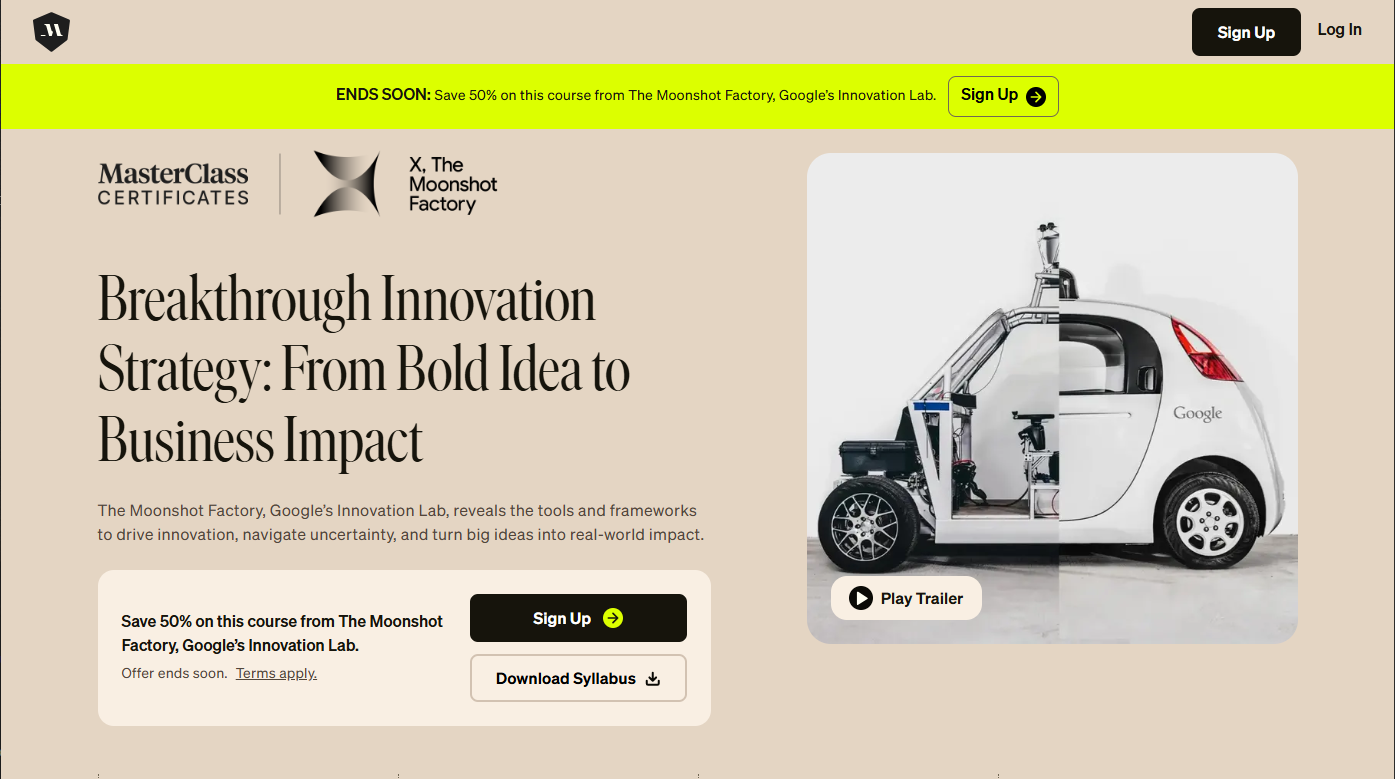
Masterclass certificate – Breakthrough Innovation Strategy
$499.00 Original price was: $499.00.$55.00Current price is: $55.00.

Masterclass Certificate – Breakthrough Innovation Strategy: The Ultimate Guide to Future-Focused Leadership
Introduction: Why Innovation Credentials Matter More Than Ever
In an era defined by rapid technological disruption, shifting customer expectations, and unpredictable global markets, innovation is no longer a “nice-to-have” skill. It has become a core leadership requirement. Organizations across industries are searching for professionals who can not only manage change but actively design it. This is where structured innovation education becomes crucial.
A professional credential built around strategic innovation equips learners with more than theory. It builds the mindset, frameworks, and execution tools needed to transform ideas into scalable impact. The Masterclass certificate – Breakthrough Innovation Strategy represents a new generation of learning experiences designed to prepare individuals and teams to operate at the frontier of creativity, business design, and sustainable growth.
This guide explores what such a masterclass typically delivers, who it is for, what skills it develops, and how it can accelerate both personal careers and organizational success.
Understanding Breakthrough Innovation Strategy
What Is Breakthrough Innovation?
Breakthrough innovation goes beyond incremental improvement. It focuses on creating fundamentally new value—new business models, new customer experiences, and entirely new market spaces. Instead of optimizing what already exists, it challenges underlying assumptions and reimagines what could be.
Breakthrough innovation strategy combines:
Deep customer insight
Emerging technology awareness
Systems thinking
Experiment-driven execution
Long-term value creation
It is not about random creativity. It is about building repeatable processes that allow organizations to consistently discover, test, and scale transformative ideas.
Why Strategy Is the Missing Link
Many teams generate ideas. Few successfully convert them into measurable impact. Strategy is what bridges that gap. A structured innovation strategy aligns creativity with business goals, risk management, and operational capabilities. It ensures that innovation efforts are not isolated workshops, but integrated growth engines.
Programs built around strategic innovation focus on portfolio thinking, opportunity mapping, experimentation models, and leadership behaviors that sustain innovation over time.
What a Professional Innovation Masterclass Typically Covers
1. Innovation Mindset and Leadership Foundations
At the heart of any effective innovation journey is mindset. Participants are introduced to the psychological and organizational barriers that limit creativity—fear of failure, rigid hierarchies, and short-term performance pressure.
This foundation stage develops:
Growth-oriented thinking
Comfort with uncertainty
Ethical and responsible innovation perspectives
Leadership behaviors that encourage experimentation
Learners explore how high-performing innovation cultures are built and how leaders can design environments where ideas are tested quickly, intelligently, and safely.
2. Opportunity Discovery and Insight Generation
Breakthrough ideas rarely emerge from brainstorming alone. They come from deep insight. Masterclasses in innovation strategy typically train participants to identify unmet needs, emerging behaviors, and systemic inefficiencies.
This module often includes:
Advanced customer discovery techniques
Trend and foresight analysis
Problem reframing frameworks
Design research methodologies
By mastering insight generation, learners gain the ability to detect opportunity spaces long before they become obvious to competitors.
3. Structured Ideation and Concept Development
Once opportunity areas are identified, the next step is building meaningful solutions. This stage transforms raw insight into strategic concepts.
Participants work with:
Innovation challenge design
Human-centered ideation models
Concept screening and prioritization tools
Value proposition design
Rather than producing hundreds of shallow ideas, the emphasis is on crafting fewer, stronger concepts that align with both human needs and organizational capabilities.
4. Experimentation, Prototyping, and Validation
Execution distinguishes real innovation from creative discussion. Strategic masterclasses teach learners how to design experiments that reduce uncertainty quickly and cost-effectively.
This phase typically covers:
Rapid prototyping techniques
Hypothesis-driven innovation
Lean experimentation cycles
Evidence-based decision making
Participants learn how to move from assumption to insight, from idea to tested opportunity, and from concept to scalable initiative.
5. Innovation Strategy and Portfolio Management
Isolated innovation projects often fail due to lack of alignment and prioritization. Strategy-driven programs address innovation at the system level.
Key focus areas include:
Innovation portfolio design
Core, adjacent, and transformational balance
Resource allocation models
Risk and return management
Learners develop the ability to design innovation roadmaps that serve both immediate performance goals and long-term strategic positioning.
6. Scaling, Implementation, and Organizational Integration
Innovation only creates value when it becomes reality. This stage explores how validated ideas transition into operational initiatives.
Common themes include:
Internal venture building
Change management
Stakeholder alignment
Metrics and performance frameworks
Participants gain practical tools for embedding innovation into everyday operations rather than isolating it within specialized departments.
Who Should Pursue Advanced Innovation Certification?
Professional education in breakthrough innovation strategy is relevant across roles and industries.
Business Leaders and Executives
For senior professionals, innovation education supports strategic renewal, cultural transformation, and sustainable growth planning.
Entrepreneurs and Founders
Founders gain frameworks that help de-risk new ventures, design differentiated value propositions, and scale more intelligently.
Product Managers and Designers
These roles benefit from advanced insight techniques, experimentation models, and portfolio thinking that strengthen both creativity and execution.
Consultants and Strategists
Innovation credentials enhance credibility while expanding the ability to guide organizations through complex transformation initiatives.
High-Potential Professionals
Those aiming for leadership positions gain future-oriented capabilities that set them apart in competitive job markets.
Career Impact and Professional Value
Earning a recognized innovation credential demonstrates more than course completion. It signals strategic capability, adaptability, and leadership readiness.
Professionals who develop advanced innovation skills often experience:
Increased leadership responsibility
Greater involvement in strategic initiatives
Improved problem-solving credibility
Stronger cross-functional influence
Organizations increasingly view innovation capability as a core competency. Individuals who can structure uncertainty, guide experimentation, and translate insight into execution become indispensable assets.
Organizational Benefits of Strategic Innovation Training
When teams engage in high-level innovation education, the impact extends far beyond individual development.
Cultural Transformation
Structured innovation programs help shift organizations from risk-avoidance to learning-driven cultures.
Strategic Alignment
Innovation becomes a coordinated system rather than scattered initiatives.
Improved Investment Decisions
Leaders gain tools to evaluate opportunities objectively, balancing ambition with evidence.
Long-Term Resilience
Organizations build the capacity to continuously adapt, not just respond to crises.
The Masterclass certificate – Breakthrough Innovation Strategy is often positioned as both a professional development pathway and an organizational capability-building tool.
Learning Formats and Experience Design
Modern innovation masterclasses are designed to be immersive rather than passive.
Typical features include:
Case-based learning
Real-world projects
Interactive workshops
Collaborative peer environments
Mentorship from innovation practitioners
This experiential design ensures that learners don’t just understand innovation—they practice it in realistic, high-complexity contexts.
Measuring Success in Innovation Education
The true value of innovation learning is not a certificate alone, but applied outcomes.
Success indicators often include:
New ventures or initiatives launched
Improved innovation process maturity
Faster experimentation cycles
Stronger collaboration across departments
Tangible business or social impact
A well-designed masterclass equips participants to deliver measurable change, not just conceptual understanding.
The Future of Innovation Credentials
As automation and artificial intelligence reshape industries, innovation capability will increasingly define professional relevance. Credentials focused on breakthrough strategy are likely to become foundational elements of leadership development.
Future-oriented programs will emphasize:
Responsible and ethical innovation
Sustainability-driven design
Human-AI collaboration
System-level problem solving
The Masterclass certificate – Breakthrough Innovation Strategy aligns with this shift by positioning innovation not as a department, but as a leadership discipline.
Final Thoughts: Investing in Strategic Creativity
Innovation is no longer episodic. It is continuous. Professionals who commit to structured, strategic innovation education invest in skills that compound over time. They gain the ability to see opportunity where others see risk, to build clarity where others experience uncertainty, and to design futures rather than react to them.
Whether you are shaping new ventures, leading organizational transformation, or preparing for advanced leadership roles, mastering breakthrough innovation strategy provides a powerful foundation. The knowledge, frameworks, and mindset developed through such learning experiences position individuals and organizations to thrive in complexity and lead with purpose.